Reliable Frost Protection for Your Crops.
How does WhiteFog thermal foggers protect your crops from FROST?
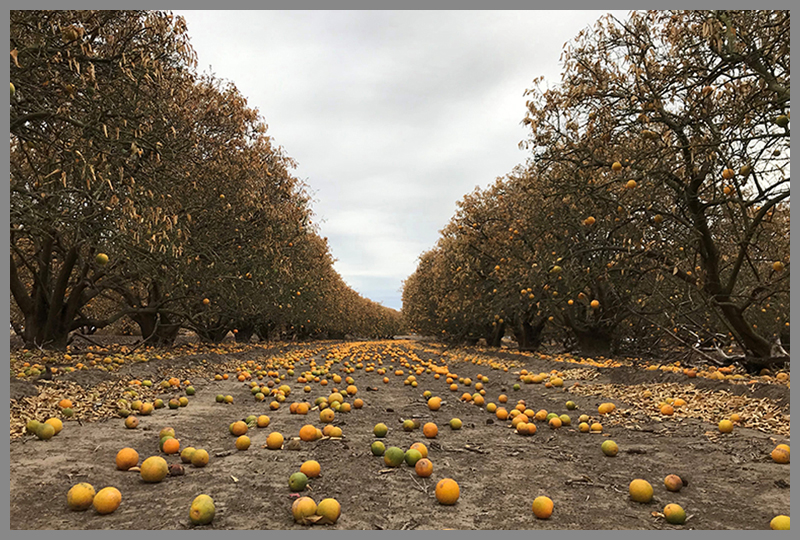
- Reflector effect with artificial cloud technology: With its three-dimensional curtain feature, artificial cloud technology provides protection from radiation frost damage that occurs during clear and windless weather. It maintains the current temperature of the land and reflects the radiation energy (heat) back to the ground. It acts as a thick blanket drawn over the field protecting the heat of the ground.
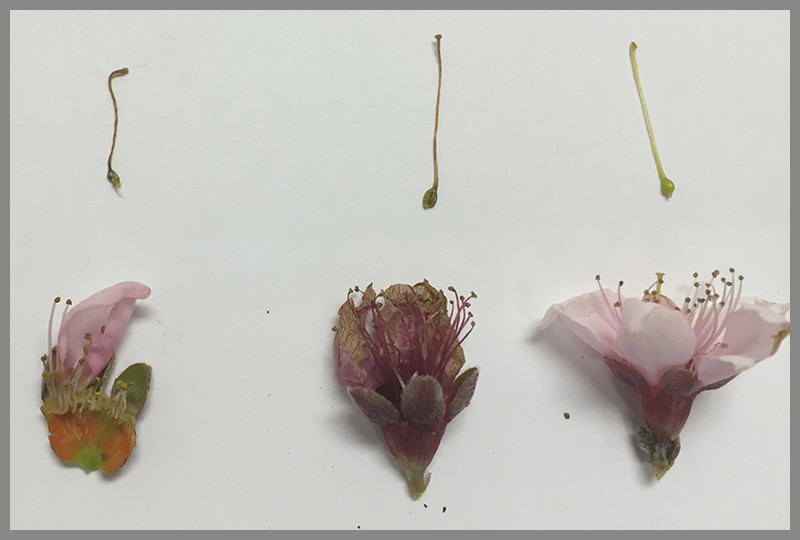
2. Anti-freeze effect with moisturizing oil vapor: The sprayed artificial cloud is the vapor form of an oil solution. It temporarily creates a very thin layer of oil over the blossoms. Penetrating between water molecules that tend to crystallize and freeze, it increases resistance to cold and provides an anti-freeze effect. It also delays and prevents conduction damage caused by the red-colored radiation energy occurring at sunrise.
3. Protection effect with inversion: The cold air mass that causes inversion is heavier than the atmosphere and tends to sink toward the ground. The sprayed artificial cloud curtain is lighter than the atmosphere and tends to rise upward. Due to the physical principle, the artificial cloud curtain prevents the cold air mass accumulated over the land from descending to the ground on the crops, it pushes it upward.
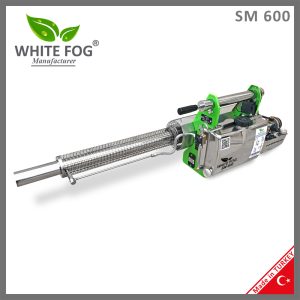
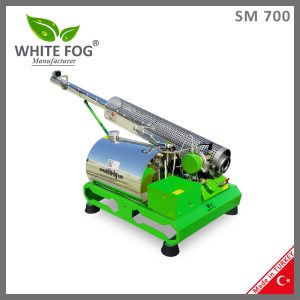
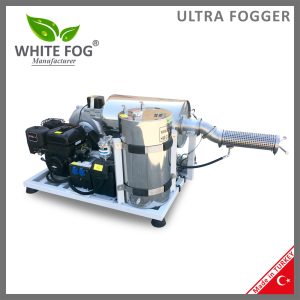
White Fog thermal foggers, provides pull protection against frost down to –7°C, and partial protection even in colder conditions.
Other applications:
Thermal fogging machines can also be used for pest and fungus control. For pests that become active in hot weather and are difficult to combat—such as red spider mites, mealybugs, aphids, psyllids, codling moth, tuta, whiteflies, thrips, gray mold, powdery mildew, leaf spot disease, and others—thermal fogging machines offer allows the operator to save money and time. Oil-based spraying is 12 times more effective compared to water-based spraying and can reach much longer distances. Since there is not a single spot left untouched by the smoke particles, contact-effect pesticides can easily reach and neutralize fungal diseases or pests. This increases both the harvest amount and quality of crops.
This versatile machines are designed for four key applications:
- Frost protection
- Insect control
- Fungus control
- Liquid foliar fertilization